Saturday, 3 October 2020

Here and there

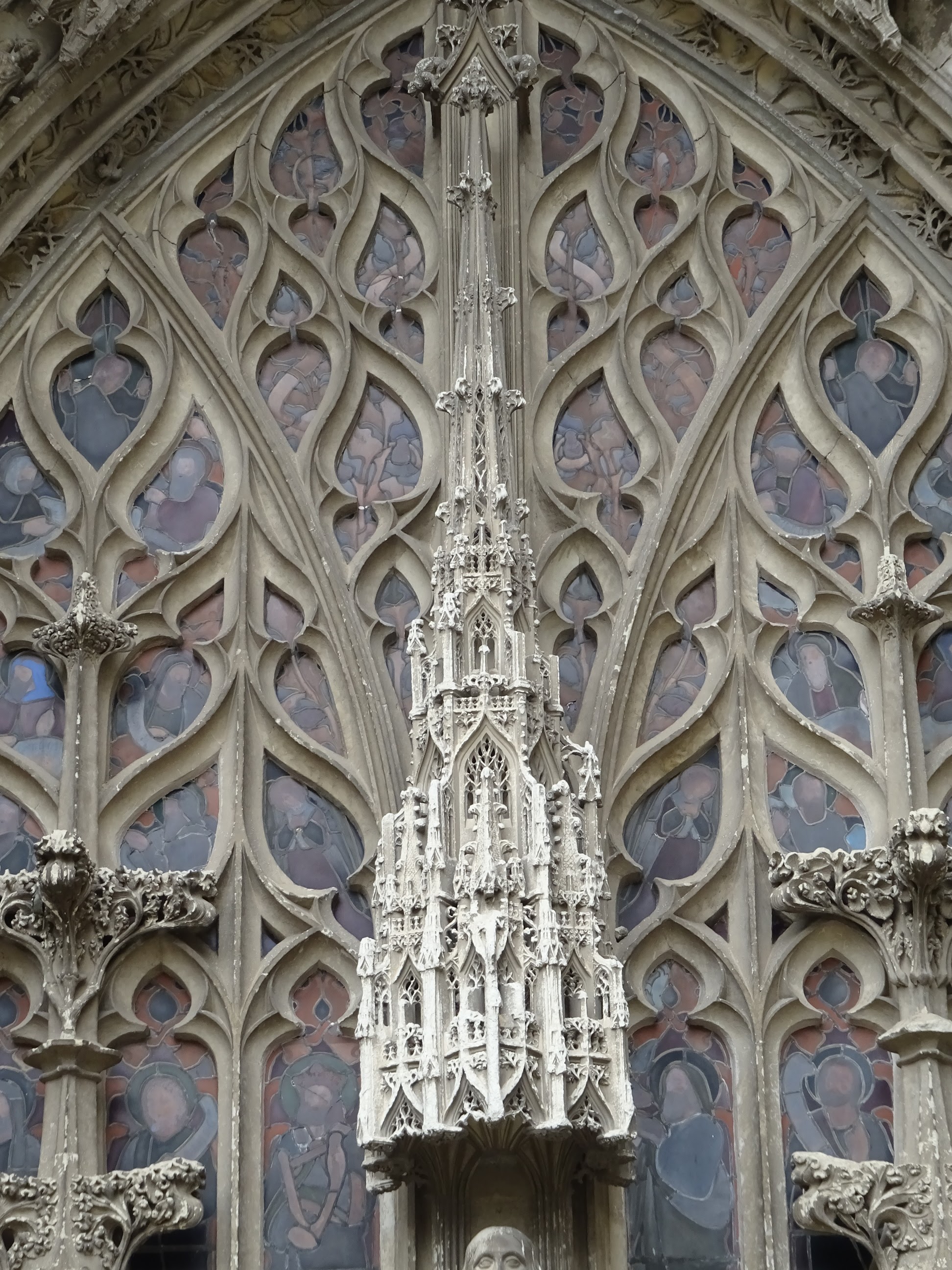
 No dramas this night! Our dawdle homeward continues though. First stop was Vendome. A church with windows different enough to be interesting after seeing so many. We didn't get up to the castle but there were plenty of old buildings to see down below, including a very large barracks block belonging to a unit that served with the Americans in their war of independence.


Bridge and town gate

Definite small calibre gunshot damage. Vendome was liberated by French resistance. Two were killed taking the Saint-Michel bridge, so is this it and and are these signs of that battle? Perfect place for a German MG.

The castle overlooking the town, though from across the river.

Ex-abbey garden

We arrived at lunchtime and of course everything was closed. The story of France for us. 😀

We had our own lunch and carried on to Chateaudun, still on the Loir. It's all on a raised spur dominated by another chateau. 


A large mill next to our camp. It seems to be occupied by squatters now

There're holes everywhere


Another milestone - 4000 km. We did 10000 door to door in the same time last year, so it shows how sluggish our trip has been. I have a feeling our fuel efficiency has been rather poor though.

Friday, 2 October 2020

Holes in the ground

Wow, did it blow last night! What we didn't know is that we were on the edge of  a storm that hit northern Italy and southern France. Since we were overlooking a valley the wind whistled up the slope by us, but not badly enough to be worried. (Though J had her sleep interrupted.) It cleared up by morning though.

Plenty of pleasant towns along the Loir (not to be confused with the Loire, though they are close), so we wandered around Montoire-sur-le-Loir.

Note the laundries at the back of each property


This one's for Mike. Did he make his own back in the day? If not, he'd love this one.

The bed bugs come big in this town! Trilobites of course.

We ended up in Troo. This area of France was an ancient inland lake, so there is (relatively) soft limestone everywhere. Inhabitants dug into the soft hillsides for quarries, storage (including mushrooms and wine of course), wells, and houses. Troo has a good selection of all of them on show.


This family left in 1962. I didn't pick on where they went.


Now...

...and then


The water passing through the limestone is filtered so very clear and quite drinkable, though full of calcium (aka, limescale). The public well was used until 1972.

Many/most houses have their own water grottoes. This one was a church and over a hundred years of calcification has left the font and alter petrified. Things left in the cave have suffered the same fate - a goblet has a 3-4 mm covering, and a a large bowl is following suit. The lights are recent but have already got a thin coating.


A town gate now...

...and Then.

Le chat de la chateau

A nice view over the open rolling countryside from the butte - an ancient defensive mound

In contrast to last night we had a very quiet sheltered spot away from roads and young motorcyclists.

Thursday, 1 October 2020

Deaux Chateau


The pile at Le Lude was a step up from yesterday's. As was the receptionist who actually seemed keen to help. Photos weren't allowed inside (presumably to make casing the joint harder) so you'll have to follow the link to see the Library and Salon in particular. It's still lived in so less than half was on display.


Originally a 14th C castle, it was upgraded to a chateau mostly in the 15th and 16th C. It survived the Revolution somehow, was bought by a bourgois French India Company trader and his (quelle horreur!) Chinese wife. 


At this point the camera battery died and I'd left the spare behind, so other photos are from our phones. Mine is crap as you can see.


19th C kitchen used until the 1940s

The base of a tower housing canons

15th C facade, apparently one of the few left in France

Old carriages

New carriages

The front lawn.

Beautified pump-house

Working kitchen gardens

So that's how the other half live...

Next stop was a archaeological site with 1st-3rd C Roman remains: Theatre, forum, two temples and baths. Apparently it was only a seasonal settlement so a bit like the camps and other businesses we find closing up around us.  
A Roman caterpillar. Hopefully not a pine precession moth which we are seeing signs of all over the place.

The Roman theatre. Seating for 3000

We stopped for the night at a small town but there were youfs on whiney motorscooters so we moved to a supermarket parking space instead. At least it had a view, looking out over a valley.